Cossor 523A Melody Master
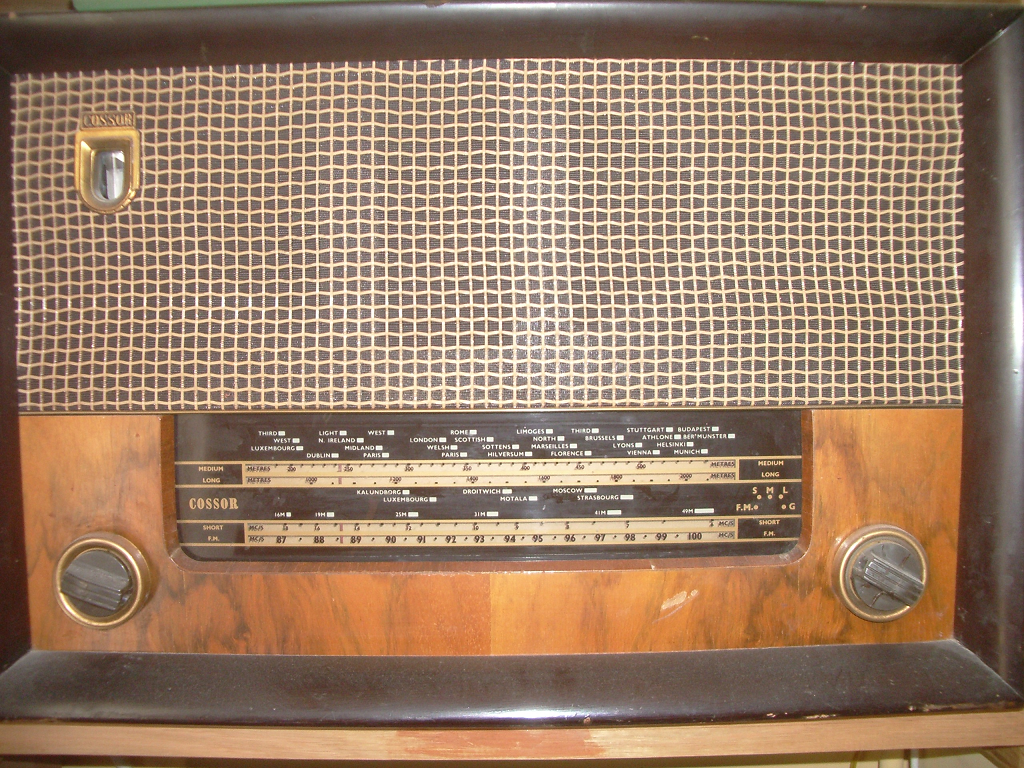
This particular set, as far as I can recall, was picked up from a second-hand shop in Bath. Finished in ‘contemporary walnut’; in 1955, this would have set you back £23, 11 shillings and a penny, plus purchase tax. It also was available as a radiogram at £49/5/9 plus purchase tax. The version shown has a socket to allow a separate record player turntable, fitted with a crystal cartridge, to be connected.
It covers Long, Medium and Short Wavebands as well as VHF Band II. Like most sets of this era, with the notable exception of the Pye VHF2D, the FM coverage is only 88-100MHz, rather than the more usual 88-108MHz commonly seen today.
Even after the expansion of independent radio in the late 70s, it was comparatively rare to find any stations near 100MHz. Nowadays it is more common to find stations at the top end of the band (or not, with this set).
Apart from a few scratches and some ageing of the plastic knobs, this set is in fine working order.
Ultra Transistor 101
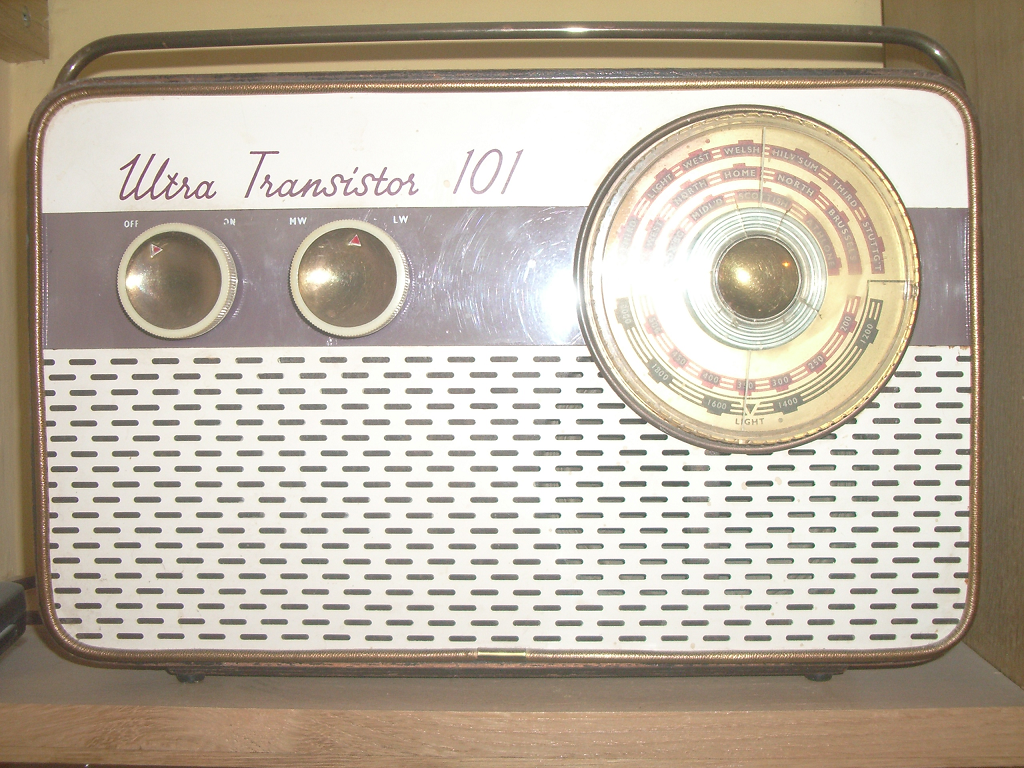
This was an ex-rental set from the days when Radio Rentals did what their name suggested. As with rental TVs, when people traded up, the old sets ended up for sale, which is how my grandfather came by this.
Originally powered by two AD28 lantern batteries, which ceased to available domestically some 20 odd years ago, now modified to use D cells in a pair of battery holders. I recently found that AD28 batteries were still used used by the railway industry until much more recently and could/can still be obtained.
This a portable set (it has a handle) using germanium transistors mounted on a printed circuit board from 1958, covering the medium and long wavebands, using a ferrite aerial, in a veneered plywood case.
Bush DAC90A
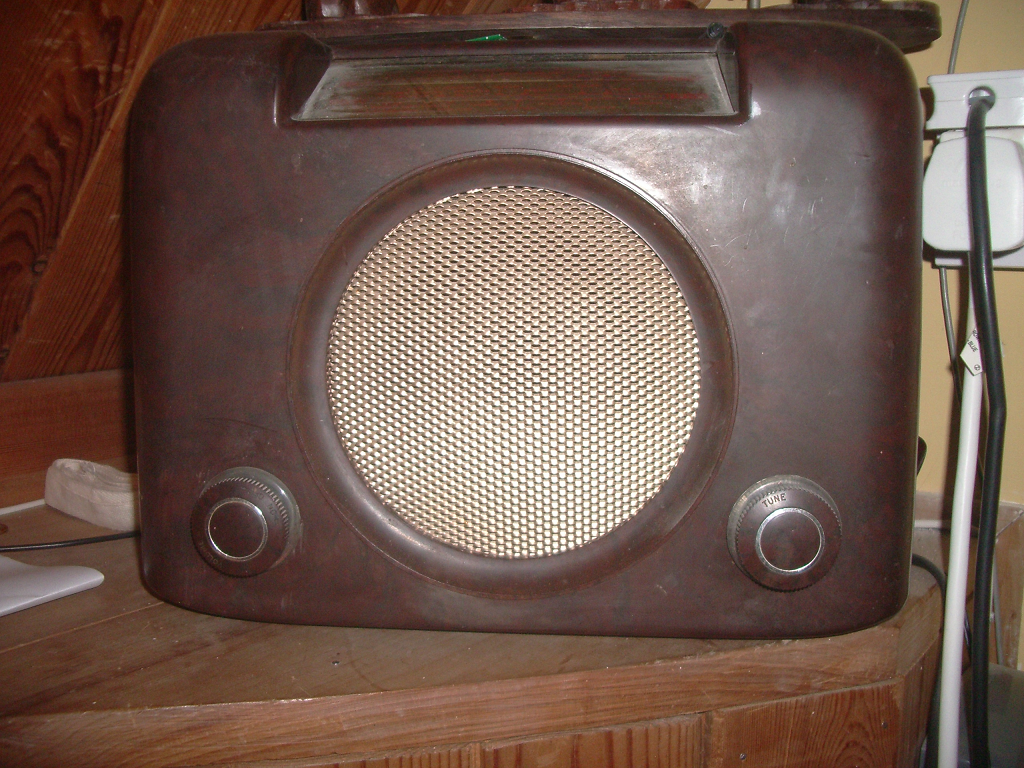
This is a famous set, often seen on TV and films in wartime (wrongly). The Hovis ad depicting the last 122 years is one such example.
I believe I also glimpsed a sight of this model in the TV series Goodnight Sweetheart, also in a wartime setting. There are actually two Bush models with very similar appearance; this one, from 1950 and the DAC90 using larger valves, from 1946. Both are post war. The DAC90 originally had a cloth grill. Most sets were in brown, but models in black and cream were also made. Coverage was medium and long wave.
This is an AC/DC set, as implied by the model number. DC mains apparently existed in the UK until the 1970s, but was rare and usually associated with industrial use, such as trolley buses or coal mining. The main ‘advantage’ of an AC/DC set was the lack of a mains transformer, although care had to be taken in the design to prevent a potentially live chassis (depending on which way the two pin mains plug was inserted) from being accessible to the user.
This particular set was bought with a £50 prize win in 1950 by my grandfather.
Cossor 499
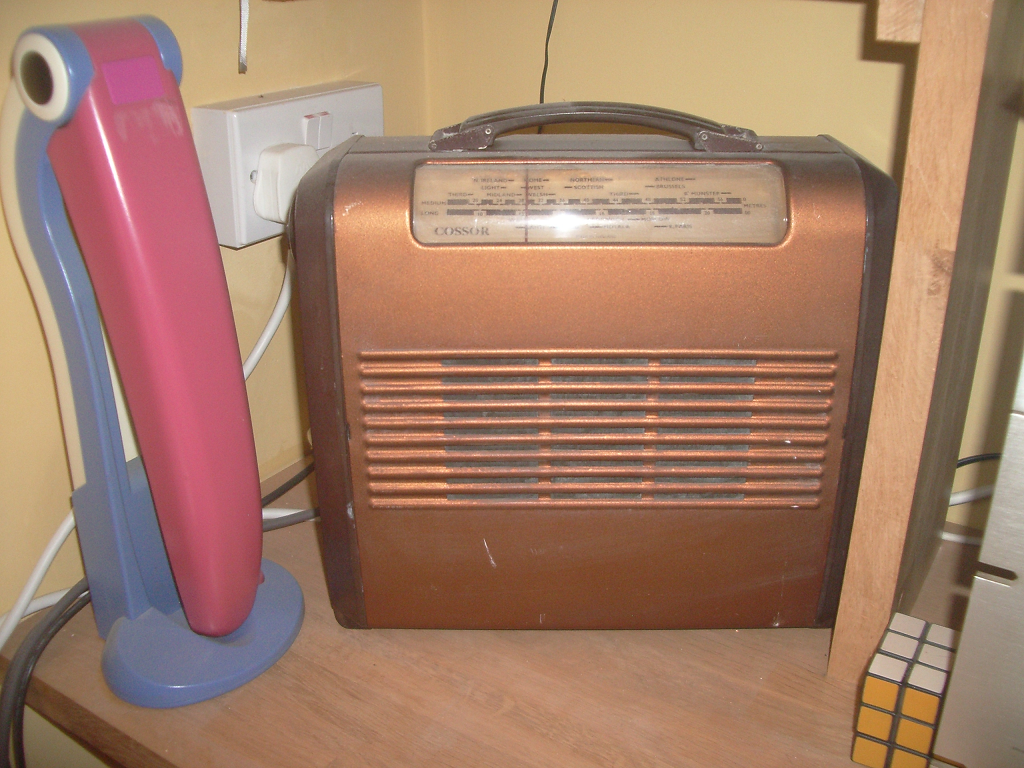
This is a valve portable – note the handle, covering the medium and long wavebands, from c1950. Originally this would have had two battery supplies; 1.5V for the valve heaters and 90V for the HT. It now has a mains adapter. The aerial is built into one of the plastic end pieces of the cabinet. It has four valves designed for battery operation and covers the medium and long waves.
Owing to the aerial design and the fact that it is now mains powered, it does have a tendency to pick up mains interference, but can sound acceptable with a moderately strong signal.
The design is not particularly service friendly, and requires a long handled screwdriver and a certain amount of swearing when dismantling.
This particular set was bought from a second hand shop in Cambridge. It had a mains lead, but no mains adapter, so naturally wasn’t working at the time.
Defiant MSH 922
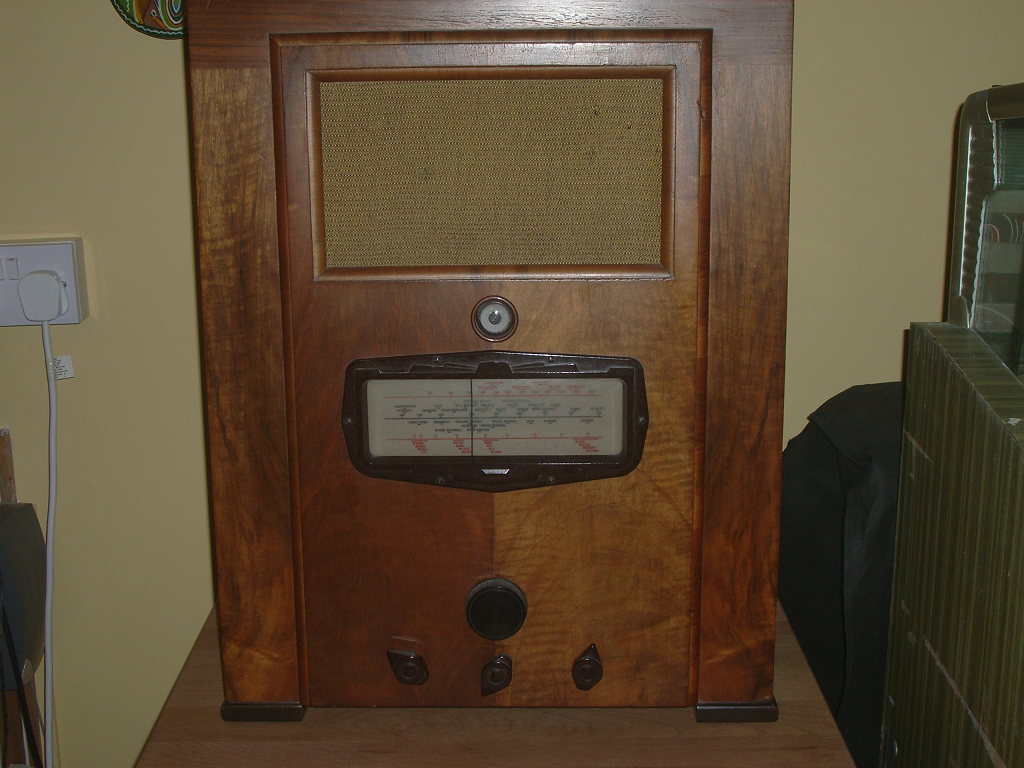
This monster was bought from a second hand shop in the Lower Bristol Road Bath in about 1980. It had a certain amount of woodworm, which somewhat alarmed my landlady at the time, but fortunately I had already administered treatment.
The mains transformer was faulty and had to be replaced, shortly followed by the main electrolytics, unable to cope with suddenly being powered up after years of sitting in an attic.
Defiant were a make associated with the cooperative society. This model dates from 1937 and is a five valve superhet covering long medium and short waves, with tuning indicator. Missing the original tuning knob, but better than the white plastic one it had when I found it
Philips BX253U
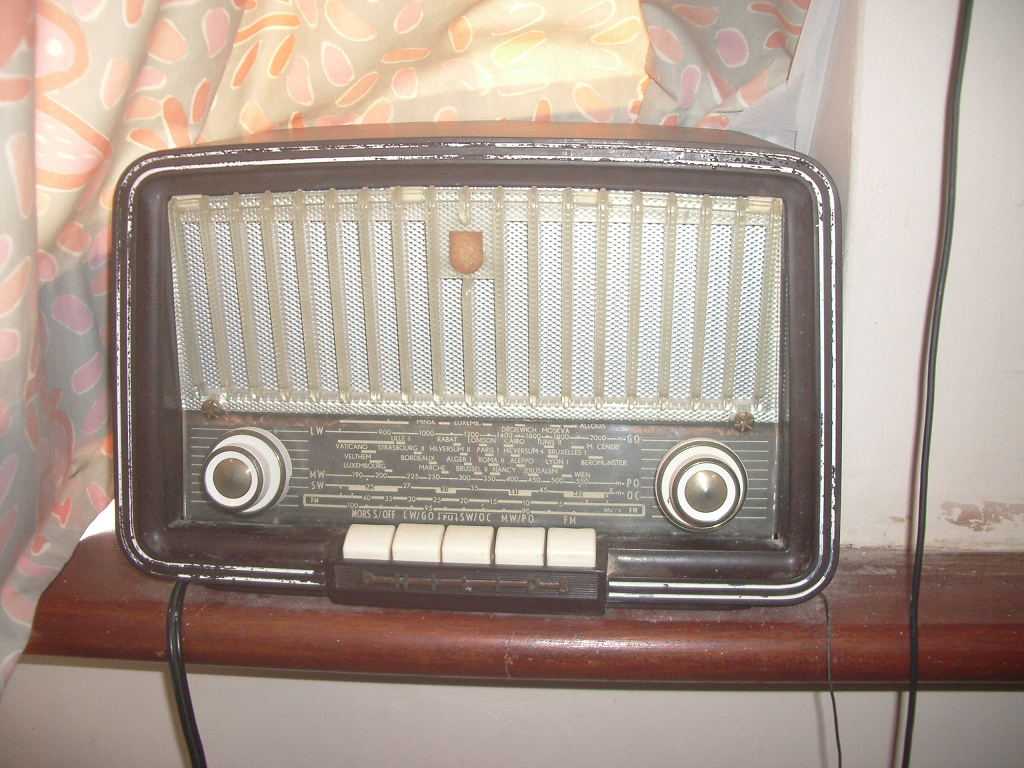
This is a dutch set from c 1955, covering short, medium long and vhf. I have a full service sheet for this model – in Dutch. Has a habit of developing hum sometimes, but often works fine for long periods.
Typical of Philips sets of this era, very difficult to work on, not helped by requiring an isolating transformer, as this is another set with no mains transformer. VHF frequency range only extends to 100MHz, so some independent stations are off the end of the dial.
Philco A547B
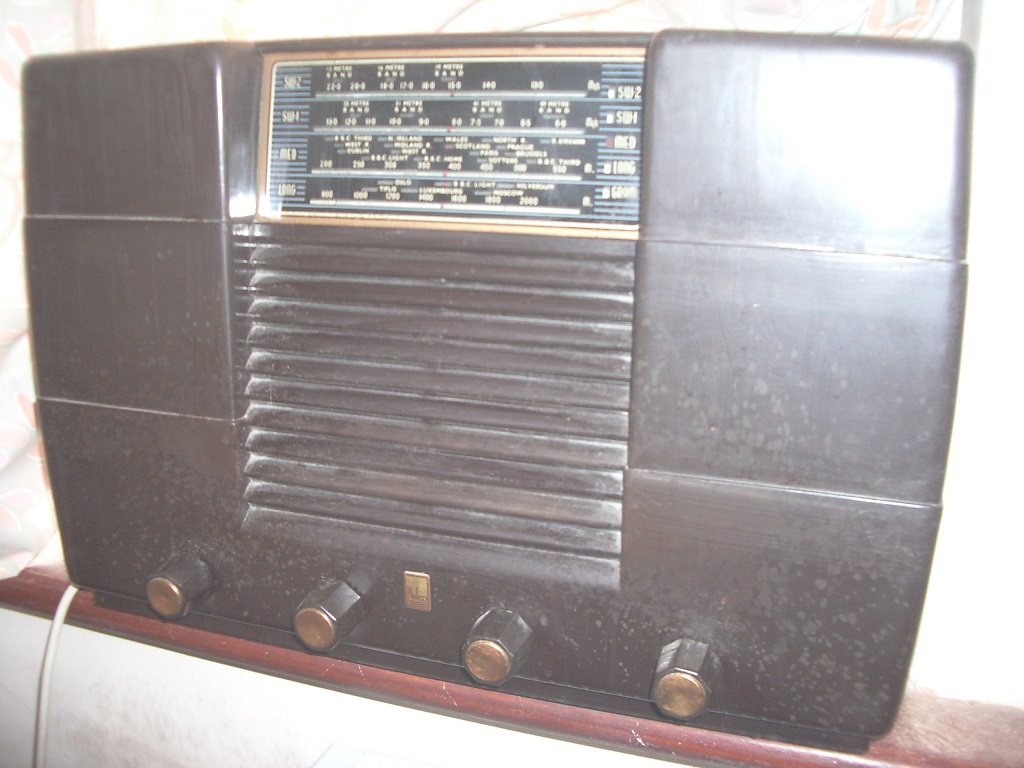
This set was given to me by a friend and had been decorated with red paint on the dial and knobs.
My brother made a great job of restoring the case after this abuse.
This is a four band AC superhet covering long, medium and two short wave ranges. Originally released in 1947, this retailed at £19/19/0d, plus purchase tax. The price was lowered to £17/17/0d in June 1948.
Murphy A122M
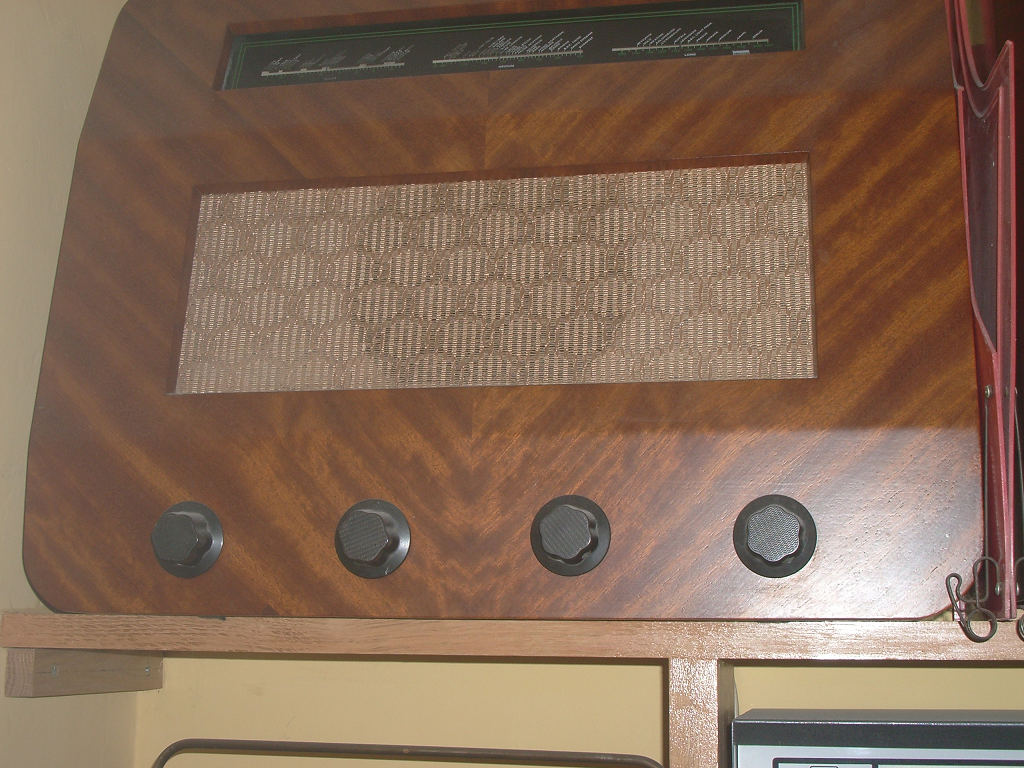
This set was picked up from a second hand shop in London Road Bath in the early 1990s.
It has a sloping front wooden case and dates from 1949, when it retailed for £26/14/9d. It covers the long medium and short wavebands.
GEC BC3740 – AC Super 4
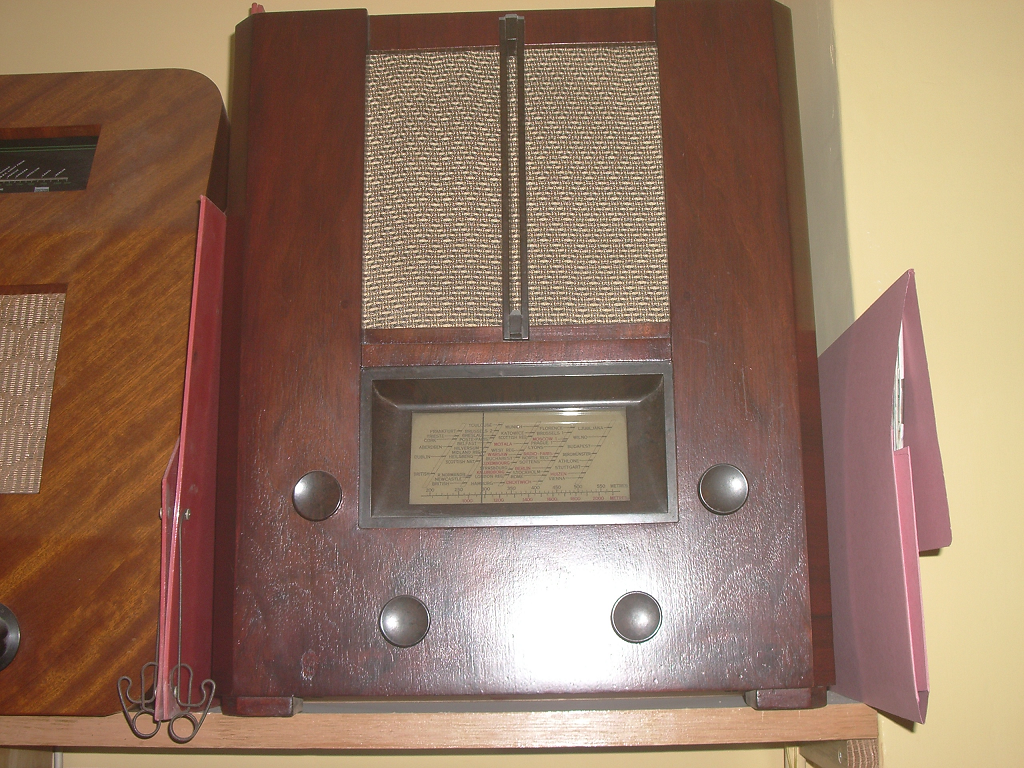
This set was given to me by a friend. It was so riddled with woodworm that the base resembled a sponge and had to be replaced.
The internal wiring differed slightly from the circuit in the service sheet, but was eventually made to work.
This model dates from 1936 and covers the long and medium wavebands. It retailed at £11/0/6d or 13/6d down and 12 monthly payments of 19/3d, or 18 monthly payments of 13/6d. This superhet had an IF of 125kHz, compared to the typical 465kHz.
Ekco A28
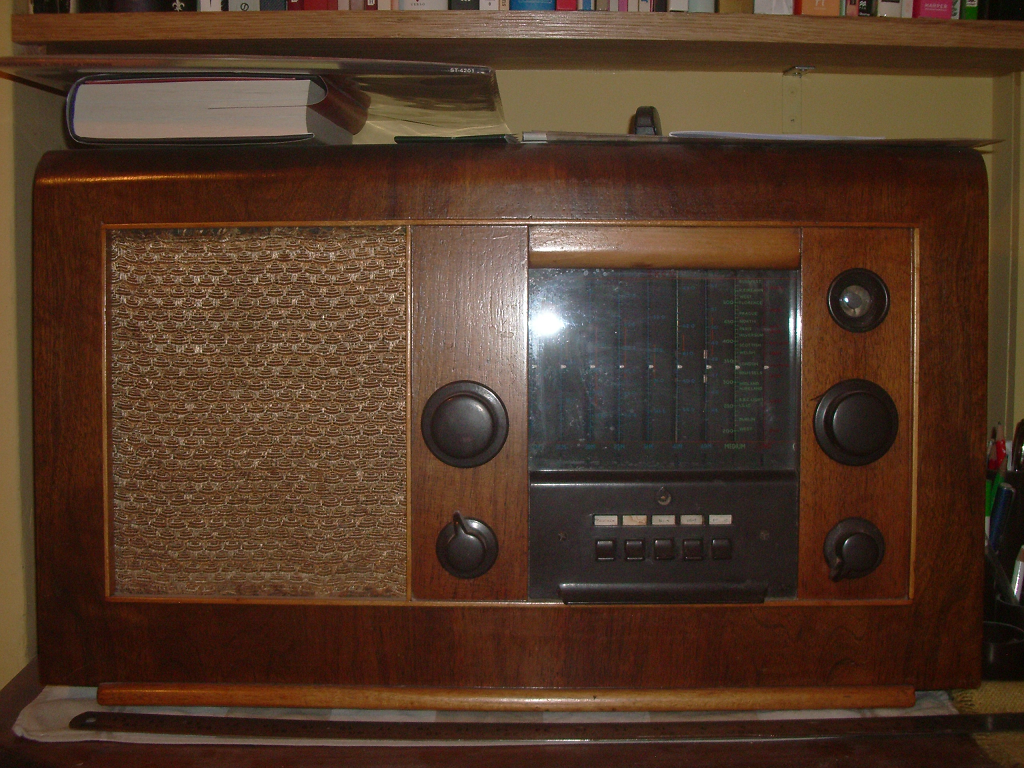
This monster from 1946 has medium wave, long wave, seven short wavebands and a television channel, plus push button tuning and a magic eye tuning indicator. It retailed at £29/8/0d plus £6/6/5d purchase tax. The name Ekco comes from the manufacturer E K Cole of Southend on Sea.