Bicycles. That’s the mode of transport for which Cambridge is most famous.
Trains have improved considerably in the past few decades, with the line now electrified all the way to Kings Cross, two new platforms at Cambridge Station, the opening of Cambridge North, and the forthcoming Cambridge South.
The main disadvantage of train travel in Cambridge is the distance from the city centre. This is not helped by the disastrous redesign of the Catholic Church crossroads and the refusal to signpost the access route from Mill Road. Owners of expensive houses in Tenison Road don’t want the unwashed of Cambridge driving past on their way to the station and the road was closed to traffic for over seven months while some trees and speed bumps were added.
Since then, there has been a large increase in the number of motorists ignoring this sign.
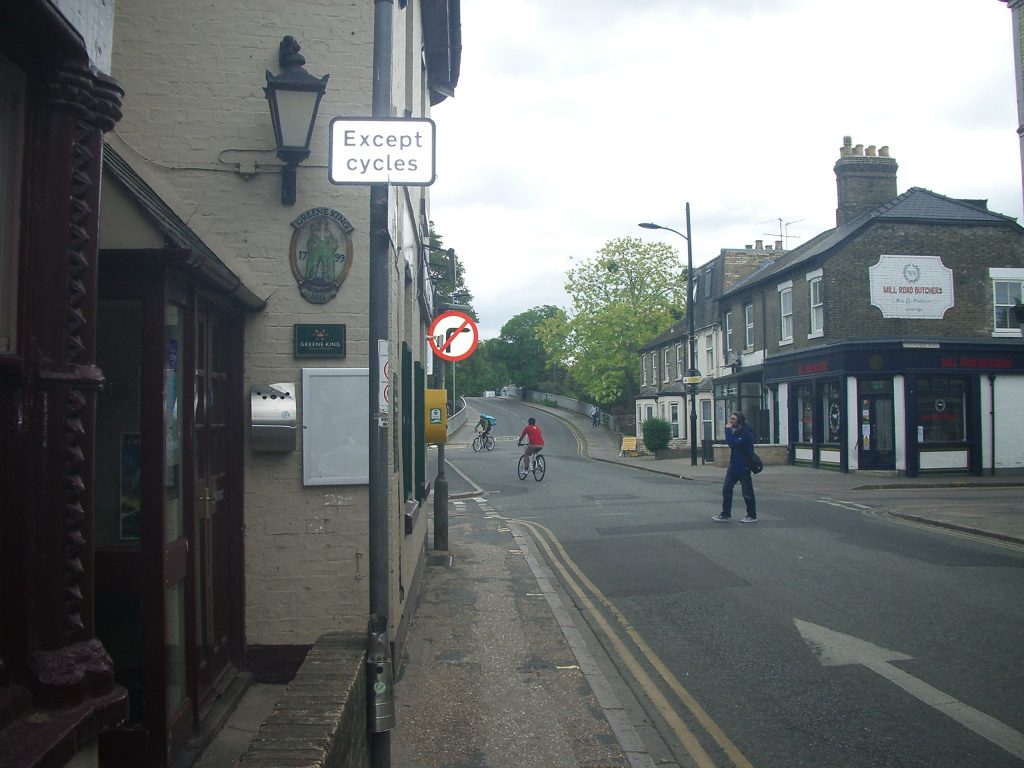
The supplementary information sign is interesting, not only because it is no longer mounted on the same pole as the sign it is modifying, but because of the invisible letters; in addition to cyclists, it appears that certain other vehicles are exempt. The list includes, but is not limited to:
Taxis, Travis Perkins customers, people on their way to the station, articulated lorries, AA School of Motoring driving instructors and police cars.
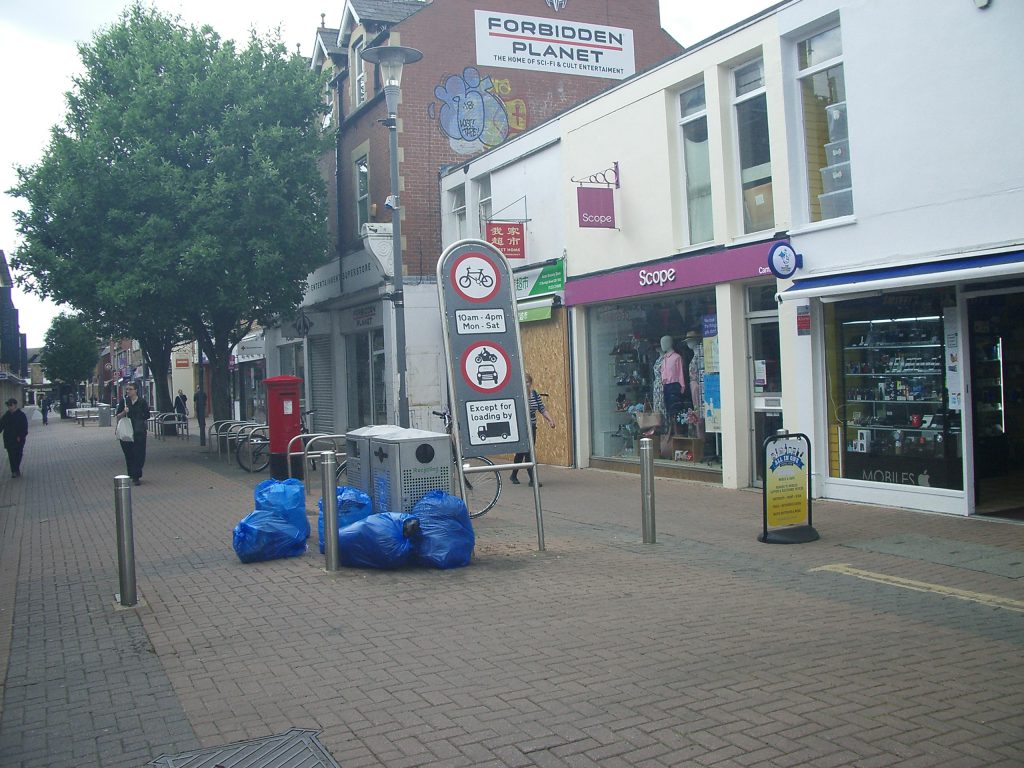
Another nomination for most ignored sign is this one in Burleigh Street. The invisble letters under the no cycling sign say “Unless you think you’re a decent kind of person, in which case, carry right on.”
Buses. I have not yet travelled on a bus in Cambridge without being tempted to get off and walk. Histon to Newmarket Road can certainly be achieved faster and more predictably on foot.
Cars are the real enemy of the traffic planners in Cambridge and delayed buses are the collateral damage. I often wonder how our traffic planners manage to get a plank of wood home from B&Q on their bikes on a rainy day.
Right at the bottom of the pile are pedestrians. In particular, the traffic planners of Cambridge have a perverse objection to pedestrians being able to anticipate the traffic light sequence at junctions.
They don’t mind traffic lights, in fact the more the merrier. Lights for every lane, even when they all indicate the same colour. It’s just that pedestrians mustn’t be able to see them when they are crossing the road.
Let’s take a walk around Cambridge and see what I mean. Below is the infamous Catholic Church crossroads.
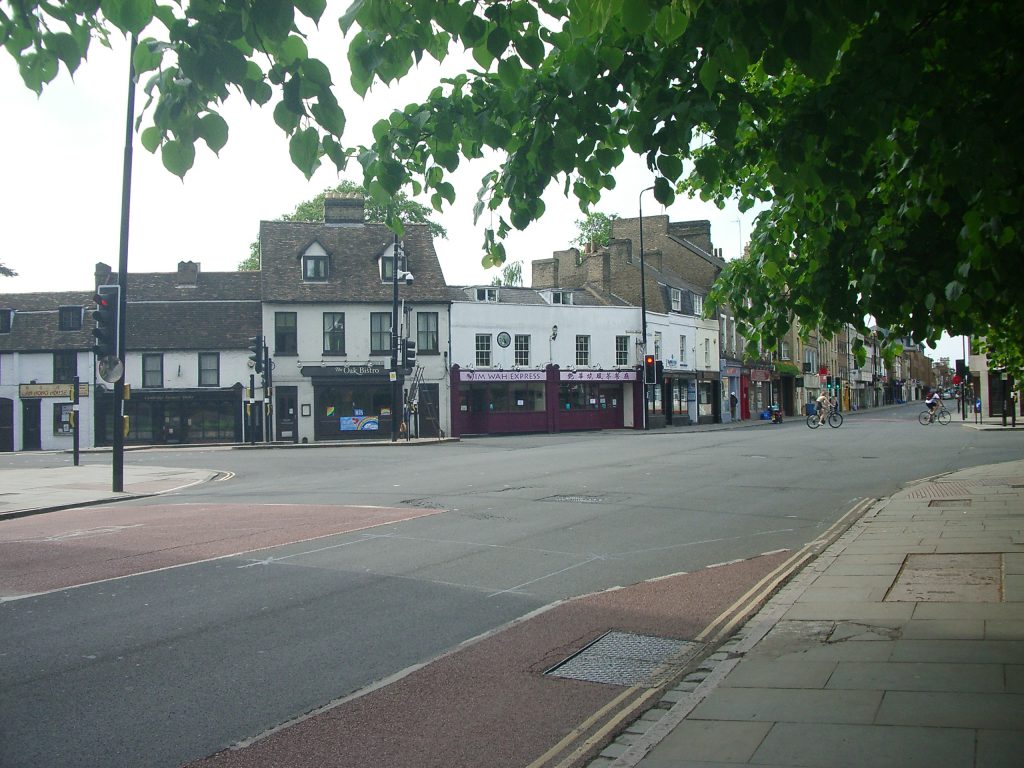
Suppose you are on the pavement at the right of the picture and you want to cross to the pavement at the left. Before the ‘improvement’ there was an island where pedestrians could make the crossing in two stages. Note how the traffic lights give you information about only one of the four directions of car travel. You have no idea if the red light will change the moment your foot hits the road. So you have to wait for the lights; and wait… and wait. Busy or quiet. 3AM.
Now let’s have a look at the other end of Cambridge; Castle Hill/Northampton Street.
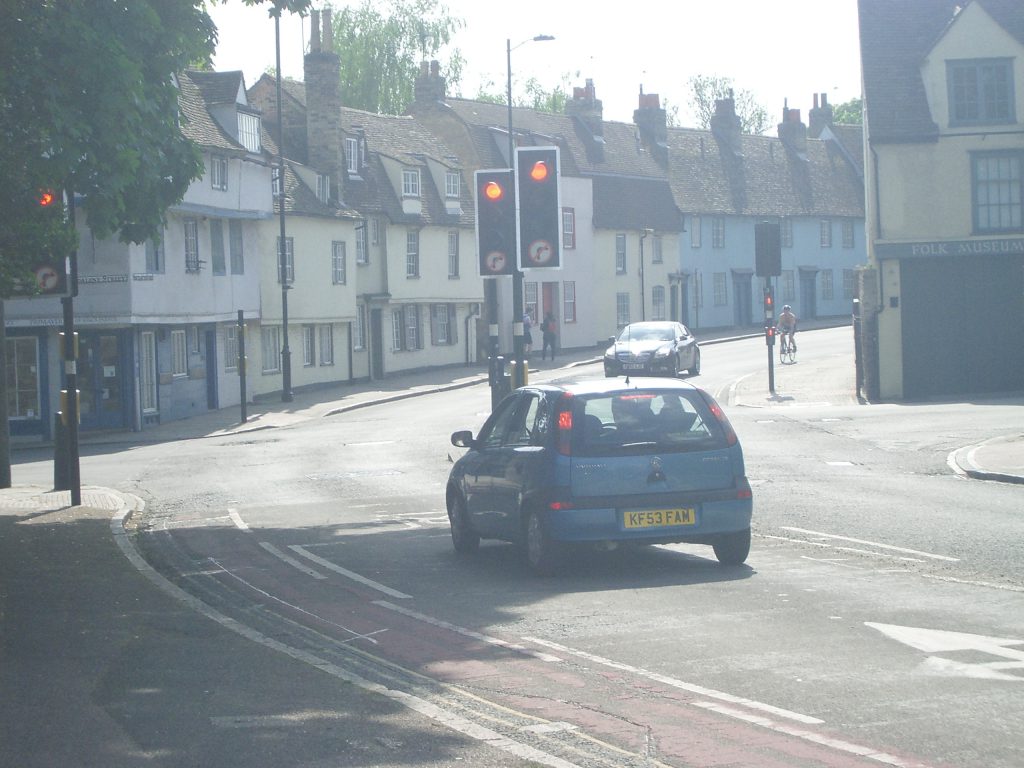
This is another junction that has been ‘improved’. Three traffic lights are visible from this view. Notice how there are none on the other side of the road. If a pedestrian were to cross from the right of the picture to the left, the three lights that we see here would be hidden from view, so the pedestrian has been denied knowledge about the potential movement of the blue car.
Next, let’s head out of town on Newmarket Road. We’ve just passed a Cycle Lane End sign, so we won’t see any more bikes on the pavement(!)
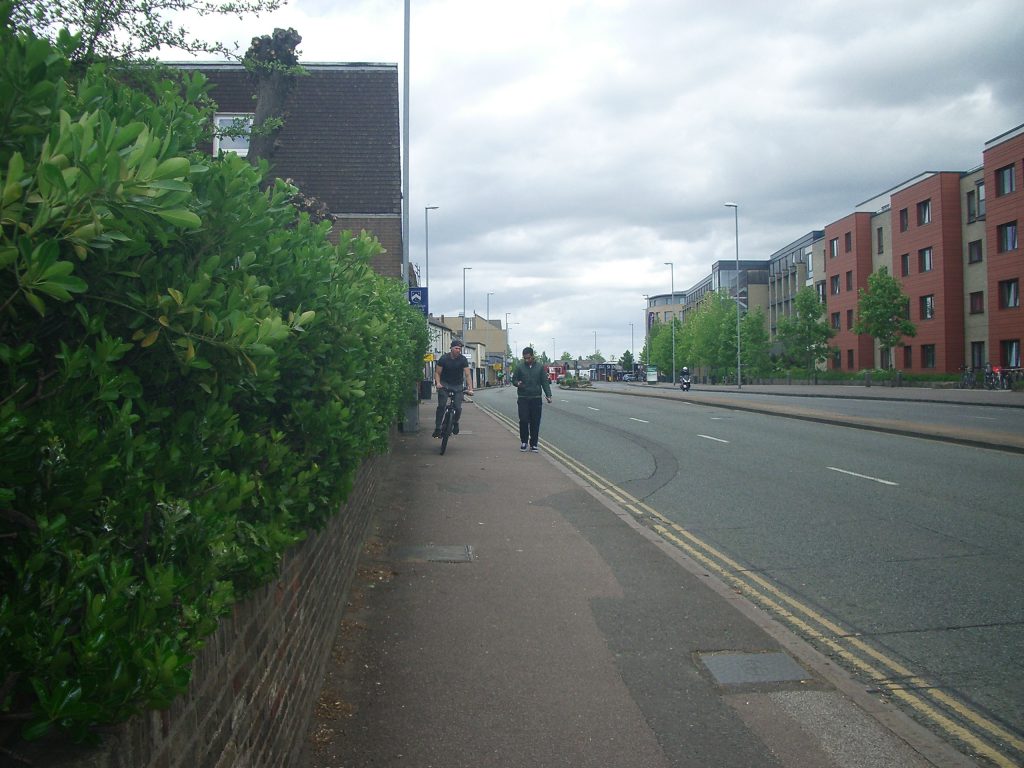
First stop is the Corner House at the River Lane turn.
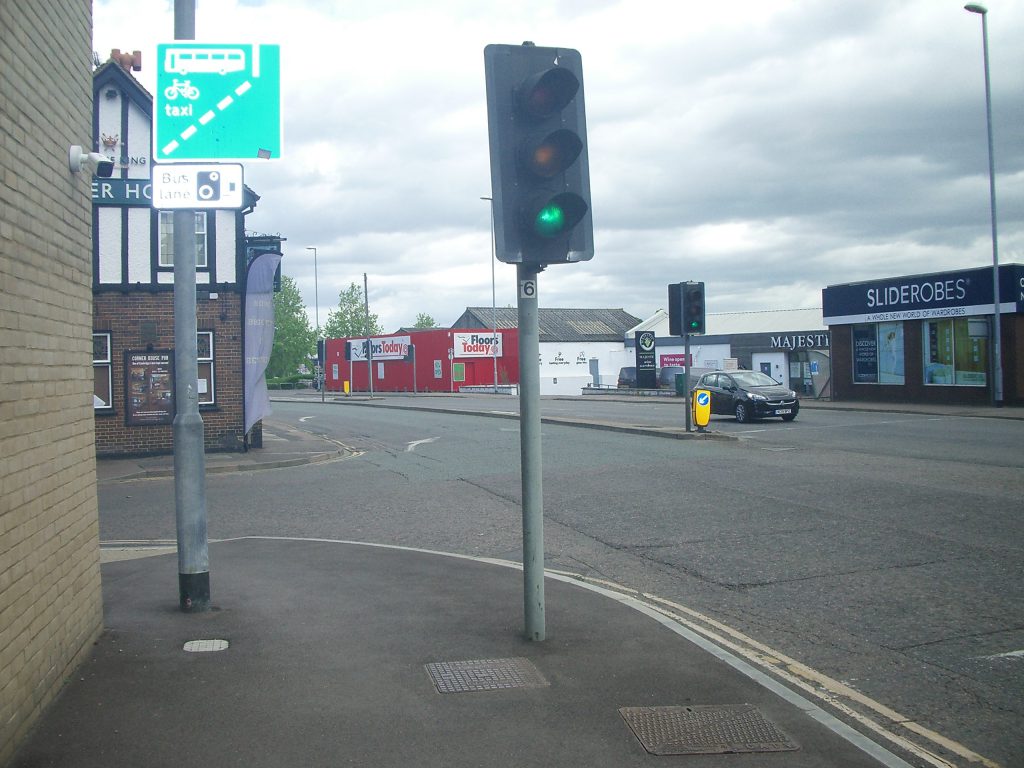
Unusually, the traffic planners have consented to place a traffic light on the other side of the the junction. Where it would be useful, however, is next to the pub, because once you’ve walked far enough past the first traffic light to see cars hidden by the wall, neither are visible any more.
Let’s walk on a little further. Here we are at the retail park on the opposite side of the road, looking back towards the city.
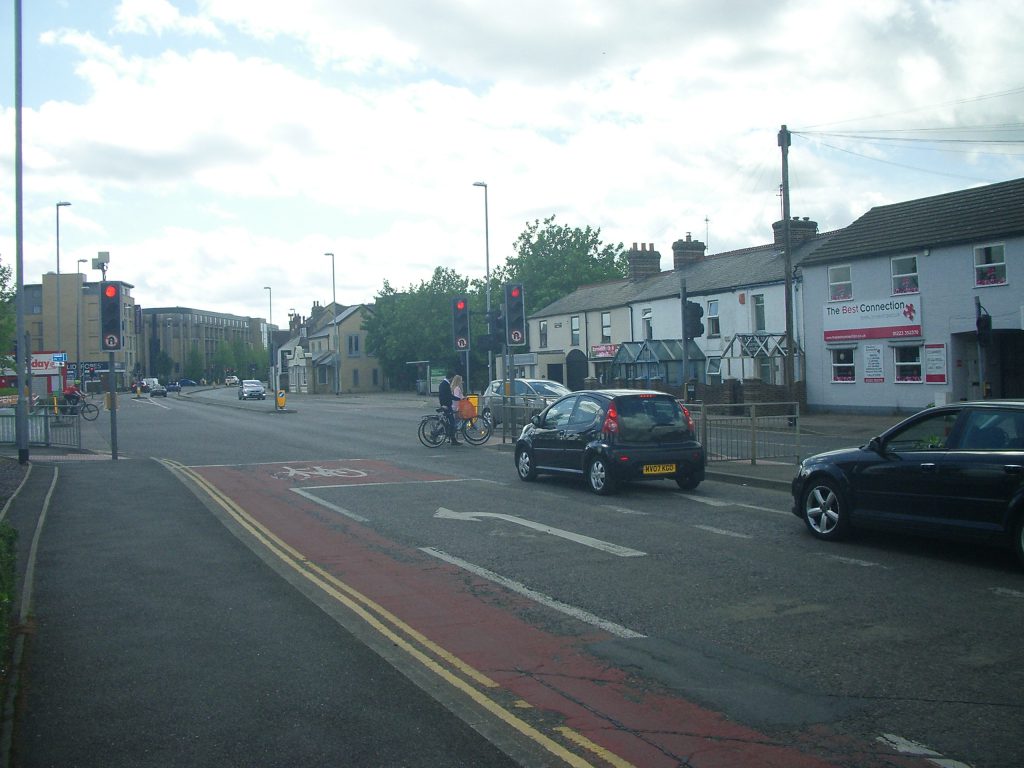
Yet again the poor pedestrian is prevented from seeing the traffic lights. And suppose you were on the far side of the Retail Park turning, wanting to visit Tesco via the footpath (next to trees, on right hand side of road). Either you chance your luck crossing four lanes of traffic or you make a 100 yard detour and make four separate crossings with the aid of the traffic lights. Unfortunate, or deliberate; you decide.
If you’re still undecided, let’s move on to the next junction at the Wrestlers.
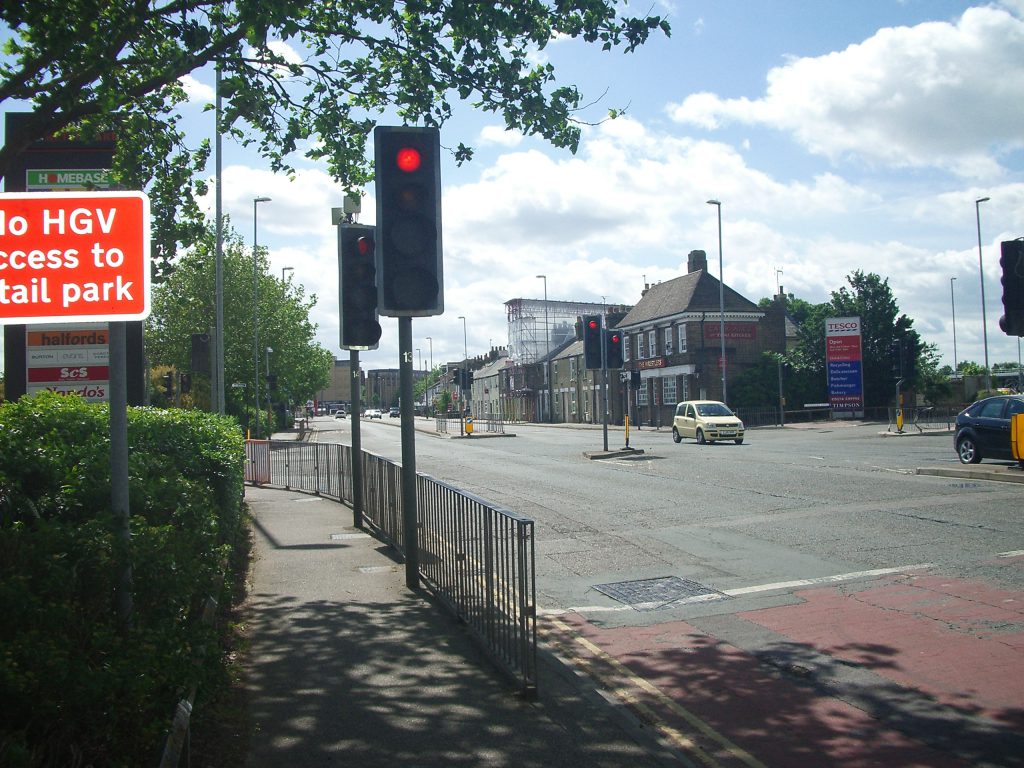
Now you’ve got to be kidding. Four traffic lights visible, two past the stop line. But wait – they’ve put a barrier where I want to cross.
Incidentally, the technique for crossing the Cheddars Lane from the Wrestlers side involves checking the bus lane at the Wrestlers. Traffic turning left will no longer be visible once you reach the crossing point. Buses are your friend here; they won’t be turning left but will keep cars away long enough for you to cross. The other direction is a lottery. Again the traffic lights are no use unless you have time on your hands for the green man.
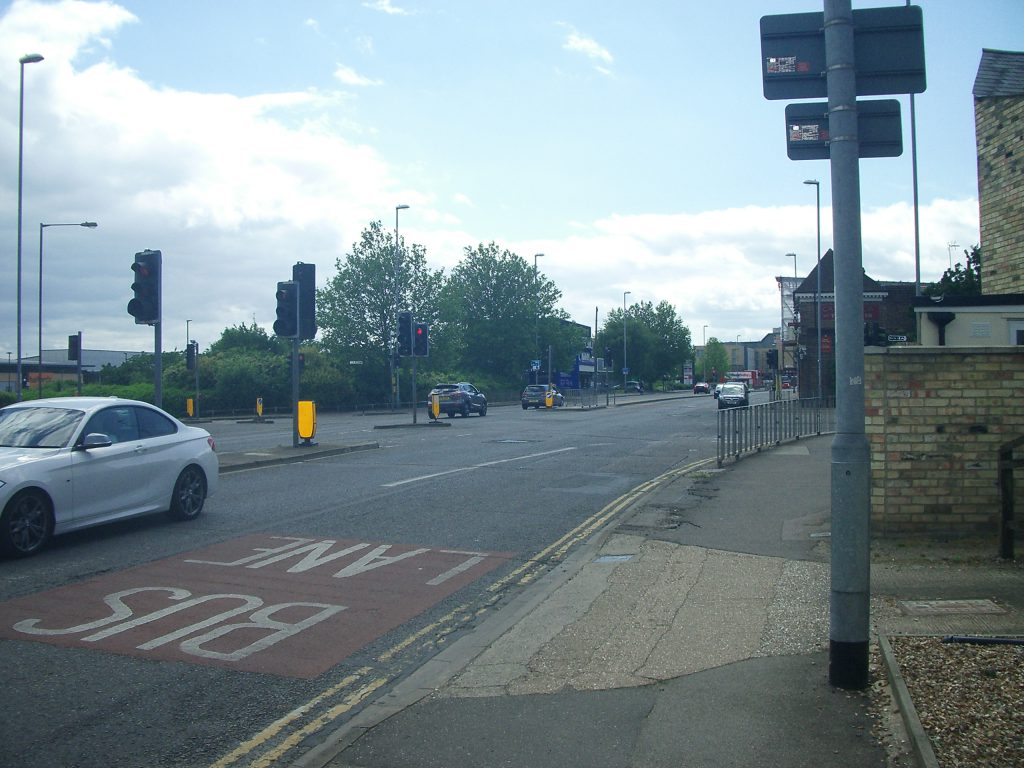
One more set of traffic lights to go; the Stanley Road / B&Q junction. No less than five traffic lights visible here. Yes I’m sure that the cost of the gantry is fully justified.
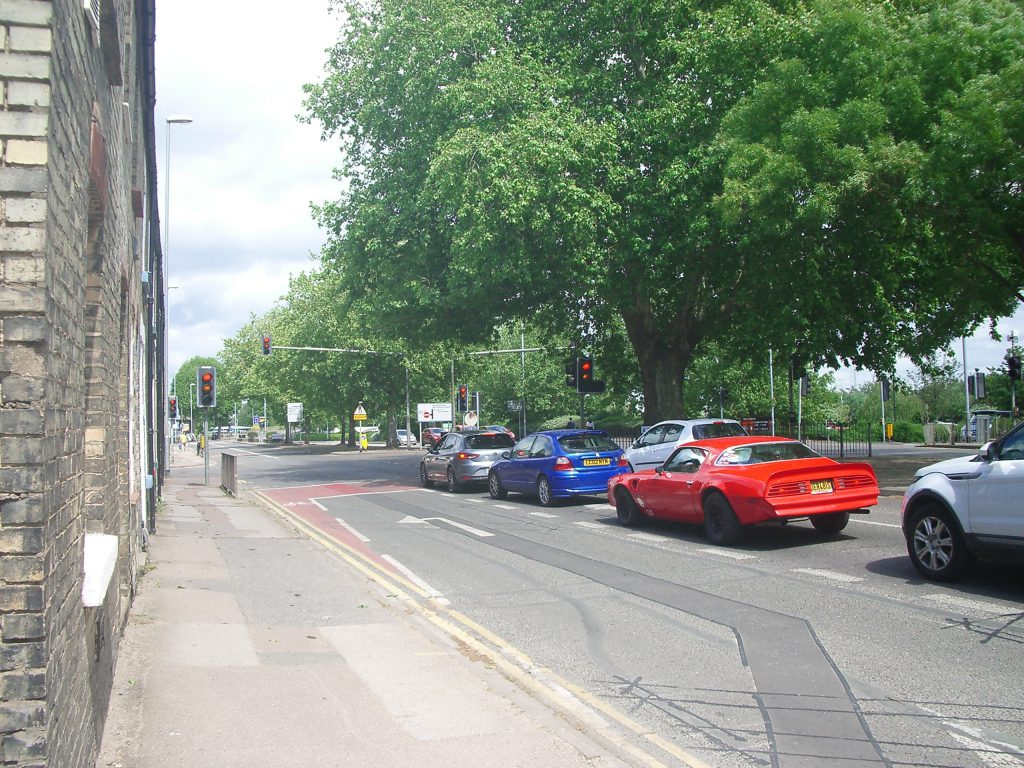
Unsurprisingly, the crossing point in Stanley Road is offset far enough away from Newmarket Road to make the traffic lights near impossible to see. For your safety of course.
Finally, the mystery of the end of the cycle path. None of these obstacles to pedestrians will have troubled cyclists; they will have all turned off for a detour beside the river and none will have cycled on the pavement. They will be able to rejoin Newmarket Road at the next turning; Garlic Row, and legally share a pavement with pedestrians.
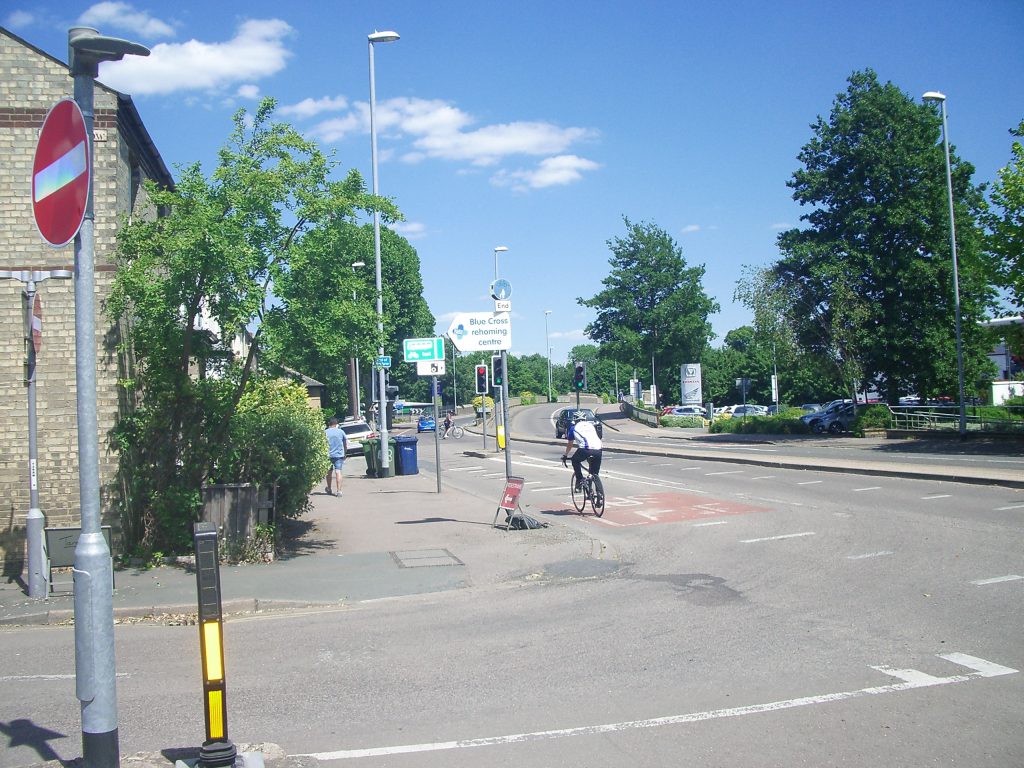
But what’s this? That’s a cycle path END. But we’ve already passed a cycle path end about half a mile back.
Could it be the END has been placed on the wrong side of the post?
Let’s have a look from the other direction.
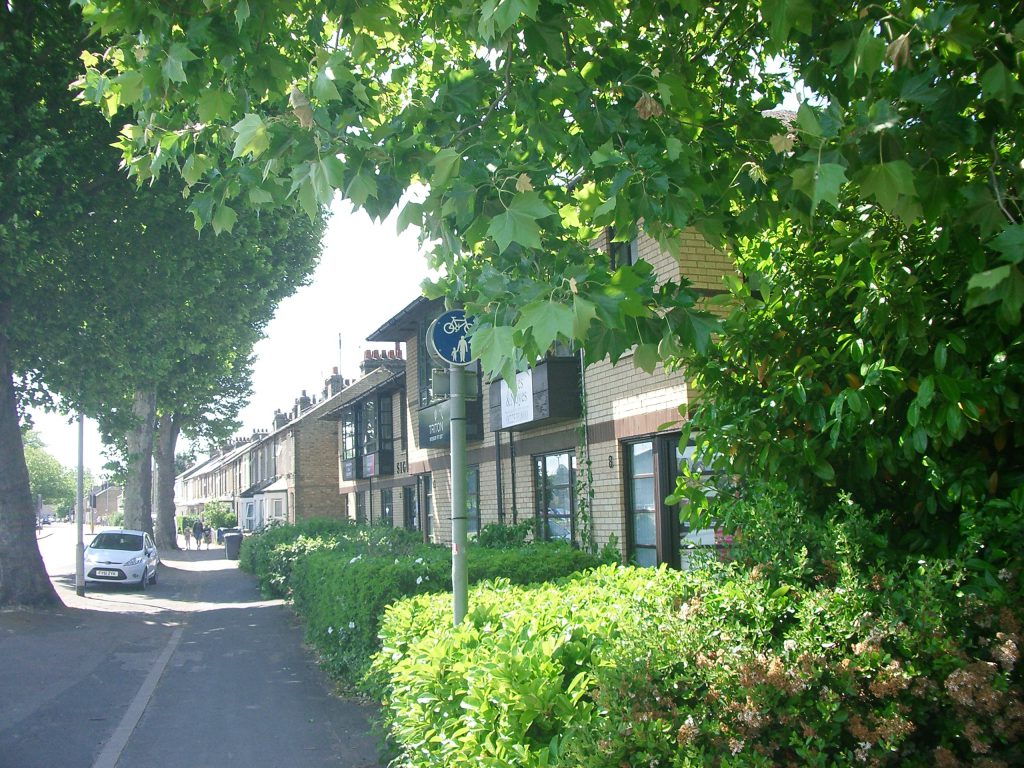
Well here’s the start, so we should expect the END sign to be visible when we reach Garlic Row from this direction.
I started work near here in 2003, so the cycle path has been wrongly signed for at least 17 years.
Pedestrians Last
If you fancy a train journey, the station is the place to remind you how far down the pecking order the poor pedestrian is.
You’re walking down Devonshire Road…
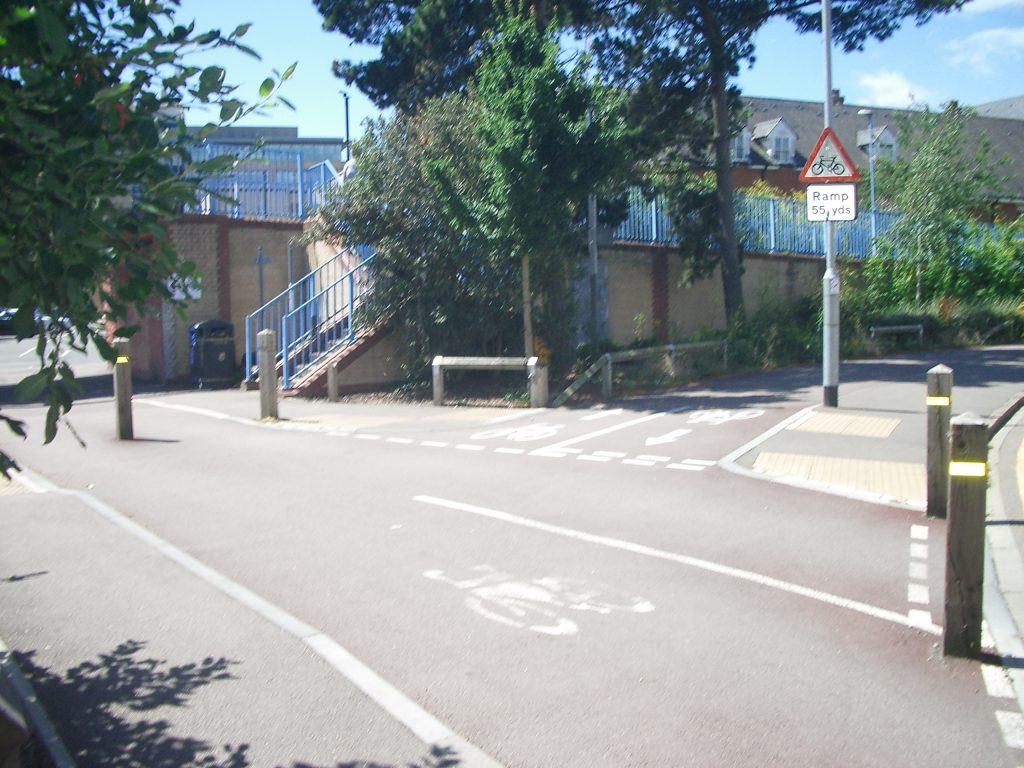
Oh dear; the footpath has come to an abrupt end. Even if you don’t want to go to the station, you’ll have to wait for the bikes; and there can be quite a few at 8:30 in the morning.
The cycles have a lane for each direction, but there wasn’t enough room for a footpath on the left for pedestrians on their way to the station.
But to add insult to injury, 25 yards further on you find you have to cross the cycle path again to join the footpath to the station.
